

When we opened our first physical store in Finland, our procurement team found themselves asking a whole new set of questions. What should be on the shelves? And how do you bring years of online experience into a real, tangible selection that customers see the moment they step inside? Tea Tähtinen, Chief Procurement Officer, and Anniina Morelius, Procurement Manager, took on this challenge and joined the cross-functional project team. In this blog, they share what they needed to solve, what they discovered along the way, and how it felt to watch the store slowly come to life.

When the project began, our procurement team and especially Tea Tähtinen, Chief Procurement Officer, and Anniina Morelius, Procurement Manager, were facing an entirely new challenge.
Anniina was responsible for shaping the store assortment and planning what would be sold from day one, work that continues after the opening in close collaboration with the store team. Tea worked closely with Anniina in the early stages and later focused on building the tools and processes needed to run a physical store. One concrete result of that work is the fulfillment tool Anniina now uses in her daily work, developed together with other teams.
At the beginning, the work felt both exciting and slightly overwhelming. “We had never built our own store before. So the very first task was simply understanding what a physical store actually needs”, Anniina recalls.
“We had never built our own store before. So the very first task was simply understanding what a physical store actually needs.” – Anniina
While this was Fiksuruoka’s first permanent store, the team wasn’t starting entirely from zero. A small pop-up store experiment in Raisio in spring 2024 had offered early learnings that could now be applied and improved upon when opening a store of our own.
From Tea’s perspective, the physical store opened up an entirely new way to serve customers.
“From the start, I was excited about how a physical store allows us to respond to customer needs in a completely new way,” she says. “For example, in a store you don’t need to set order limits like you do online. It’s great when the need comes directly from customers, and we can serve them even better.”
Early discussions focused on the fundamentals: which categories had to be included from day one, how wide the assortment should be, and what customers would expect to find. One key question was whether the in-store assortment should differ from the online one. After many discussions, the answer was no.
“We wanted the experience to be clear and familiar. If a customer knows Fiksuruoka from online, they should recognise the products in the store too”, Tea explains.
But that decision opened a second, more exciting question: What can we offer in a physical store that we can’t online?
In an online store, products move based on browsing behaviour, digital marketing, and recommendations. In a physical store, everything depends on what customers see the moment they walk in: on the shelves, at the ends of aisles, and at the checkout.
“We had to start thinking spatially,” Anniina explains. “Not just what we buy, but where it will go, how much space it takes, and how it will look on the shelf.”
Before individual products could even be discussed, the team needed to understand the physical reality of the store: how much shelf space was available, how products would flow through the space, and how the store would function in everyday operations.
While the brand and marketing teams focused on the visual layout and overall look of the store, the procurement team concentrated on functionality: making sure products would fit, shelves would be usable, and the assortment could be managed efficiently day to day.
For Tea, one of the biggest shifts was volume forecasting.
“Online, if we buy too much of something, we can usually convert it,” she explains. “In a physical store, you really feel the impact of every decision, both the good ones and the bad ones.”
Beyond volumes, the team had to rethink several things that don’t exist in the same way online:
What surprised Anniina most was how strongly the physical environment influenced decision-making. “I had never thought so much about packaging sizes. Suddenly the question wasn’t only ‘do people want this?’ but also ‘does this physically fit anywhere?’” she explains.
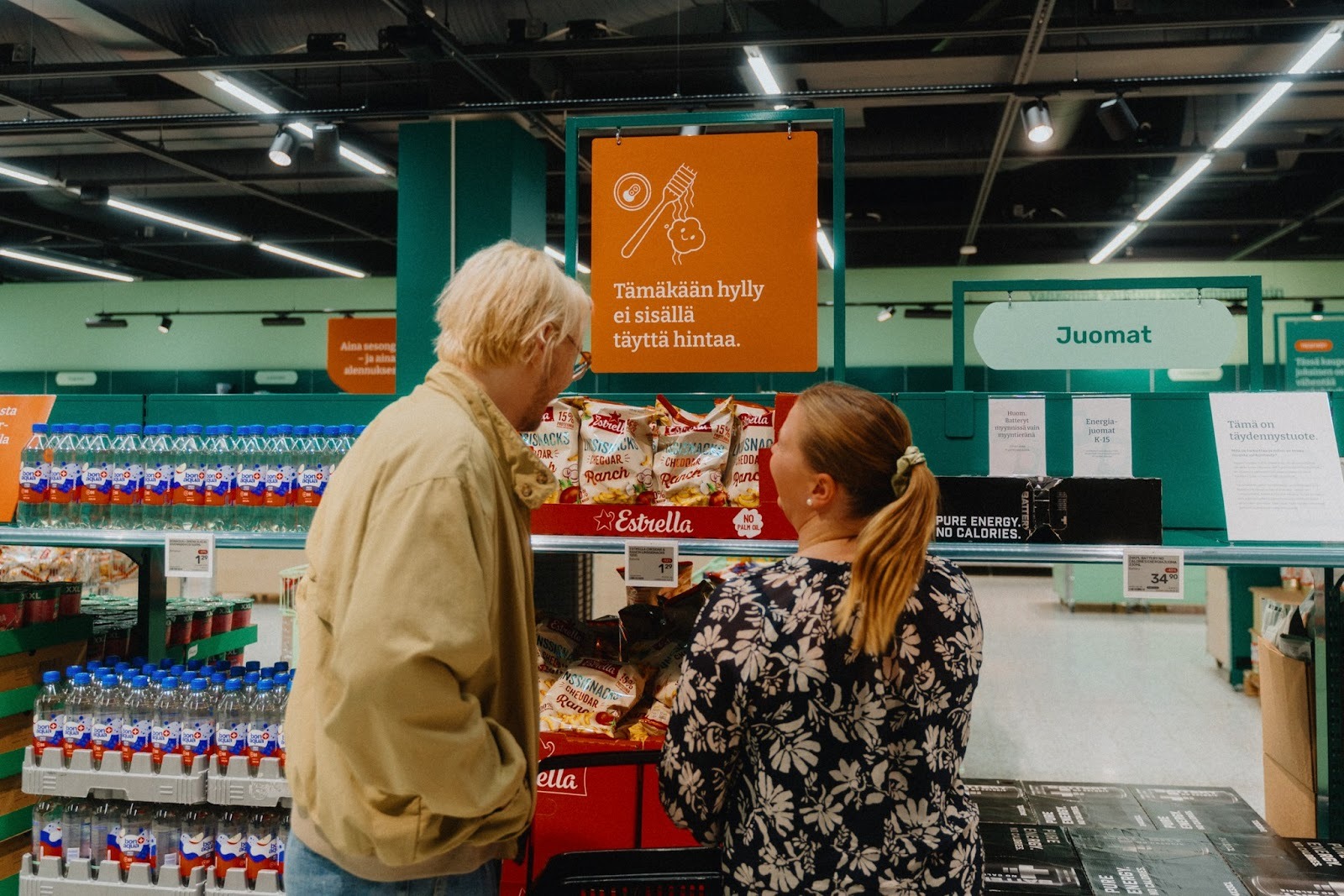
Keeping the same core assortment in the store as online gave the team a clear and familiar starting point. But quite quickly, Tea and Anniina realised that a physical store could also unlock something entirely new.
“We started thinking beyond our usual categories. What could we add that simply doesn’t work online? What would make the store experience special?” Anniina says.
The idea didn’t come out of nowhere. For some time already, the procurement team had received questions from suppliers about surplus products that couldn’t be sold through the online store.
“We already knew there was a supply. Suppliers had been asking about these categories for a long time. Opening a physical store finally gave us the chance to explore whether we could make it possible”, Tea says.
This opened the door to entirely new product groups:
Turning that opportunity into reality required much more than adding new products. The team needed to make sure the store could support the right kind of storage, that cold chains could be maintained all the way from suppliers to shelves, and that logistics would work smoothly with warehouse partners. In the case of alcohol, selling permits also had to be secured, something that isn’t possible online.
“It wasn’t just about wanting to sell new products, but figuring out if we could actually do it responsibly and properly”, Anniina says.
A physical store also required the team to rethink everyday procurement work in very practical ways. This shift required the team to think differently about everything:
For Anniina, the opening day didn’t mean that her work was done. Once the store opened, the focus shifted to keeping it running: following how products moved, ordering more, and working closely with the store team.
Seeing the store in action was still special, and what stood out most were the people. “It was amazing to see how enthusiastic the store employees were. They really felt like this was their store too in a way that they wanted to really make it work”, Anniina says.
Anniina also spends some time at the store herself, working morning shifts and filling shelves. She was positively surprised by how well the store served its purpose in practice. Opening the store also meant building a completely new team and creating new jobs, which made the moment even more meaningful.
Tea shares the same sense of pride. While expectations were already high, the opening still exceeded them.
Both are especially proud of how smoothly new product categories came to life. From day one, the store had frozen and chilled products available and they ended up working remarkably well. A strong supplier network and close collaboration made it possible.
For Tea, pride also comes from the less visible work behind the scenes. Developing the fulfillment tool for the store created a sustainable way to manage product flow and laid a solid foundation for daily operations.
For Anniina, the biggest learning wasn’t about procurement itself, but about working in uncertainty. “This was by far the biggest project I’ve been part of. The work itself wasn’t the hardest part, it was learning how to think in a much bigger context”, she reflects.
“This was by far the biggest project I’ve been part of. The work itself wasn’t the hardest part, it was learning how to think in a much bigger context.” – Anniina
At the beginning, many things were unclear. Decisions couldn’t always be made immediately, and information was often incomplete. Over time, Anniina learned to better recognise her own responsibility: when to move forward independently, and when to ask for help.
“I had to learn to tolerate not knowing everything and to trust that clarity would come later”, Anniina says.
Tea approached the same challenge from a different angle. For her, the key learning was balancing progress with long-term thinking. “You can always find a solution that works in the moment. But taking the time to make it sustainable is harder, and much more important”, Tea says.
“You can always find a solution that works in the moment. But taking the time to make it sustainable is harder, and much more important.” – Tea
That mindset shaped many of the project’s decisions. The goal was never just to open a single store, but to build something that could work again and eventually scale.
Working closely together strengthened both of their approaches. Anniina learned from Tea’s calm, long-term perspective, while Tea says she learned courage and decisiveness from Anniina.
The project also pushed procurement into close collaboration with many other teams. While that added complexity, it also broadened perspectives. “You couldn’t stay in your own bubble. You had to understand how your decisions affected everyone else”, Anniina says.
Looking back now, both are surprised by how well everything ultimately came together.
“I had imagined much more chaos. But in the end, the opening felt controlled and calm. From the outside, it really looked like we had everything under control”, she smiles.
#1 You have to be brave if you want to build something new
Building something for the first time requires courage and trust, especially when there’s no data or clear examples to lean on. Throughout the project, Tea and Anniina had to make decisions that meant choosing progress over playing it safe. “We had to try, test, and trust ourselves,” Tea says.
#2 Collaboration is everything
The store was built through close cross-functional collaboration across procurement, marketing, brand, store operations, logistics, data and suppliers. “Everyone brought something that made the store better,” Anniina reflects.
#3 A physical store brings our mission to life, and makes it scalable
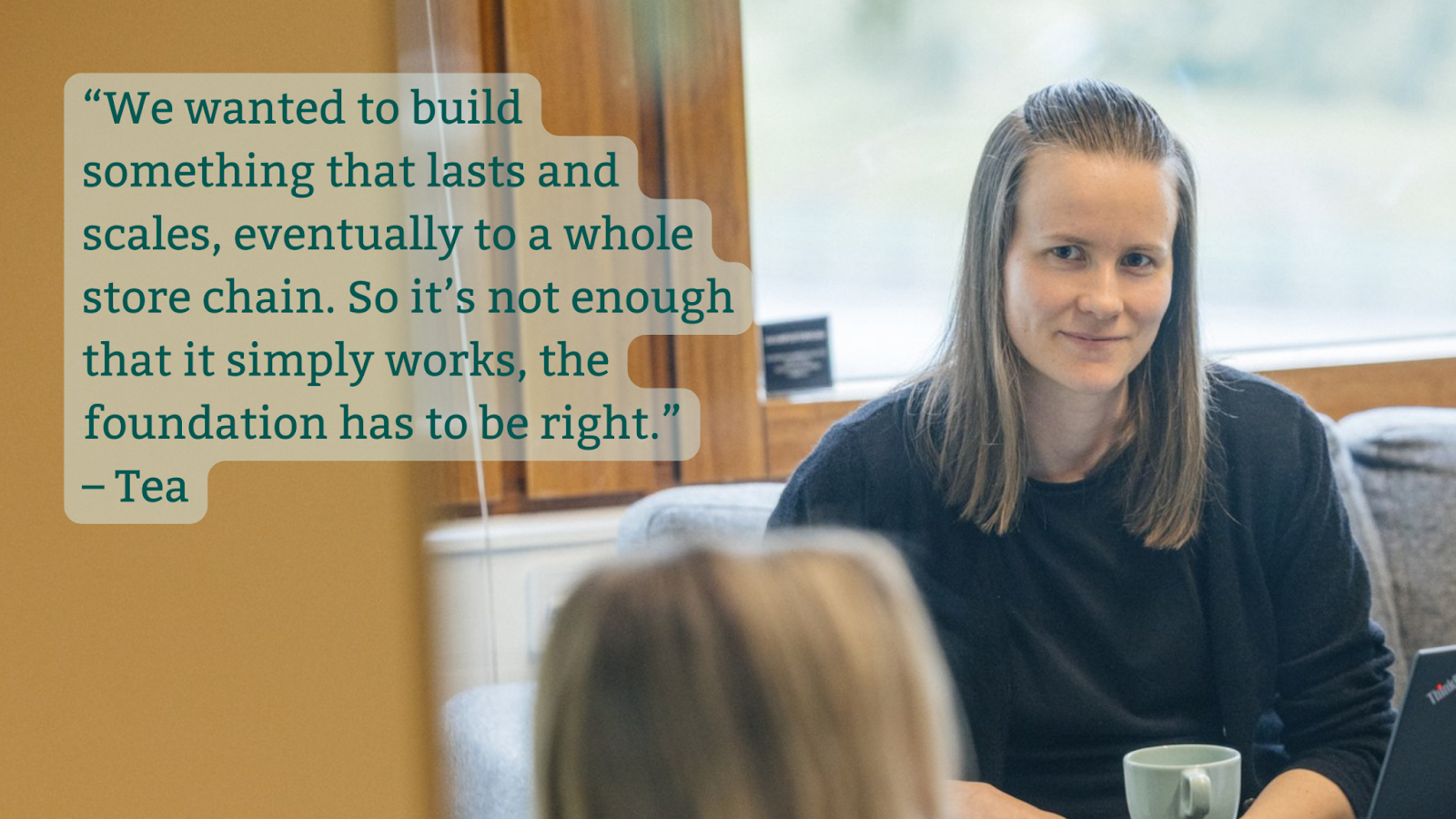
Opening a physical store strengthened our ability to fight against food waste by making new product categories possible and serving both customers and suppliers in new ways. “We wanted to build something that lasts and scales, eventually to a whole store chain. So it’s not enough that it simply works, the foundation has to be right”, Tea says.